TL;DR: An HVAC apprentice can work with refrigerant without Section 608 certification only while closely and continually supervised by a certified technician. The apprentice cannot buy refrigerant, and the certified technician and apprentice share responsibility for compliance.
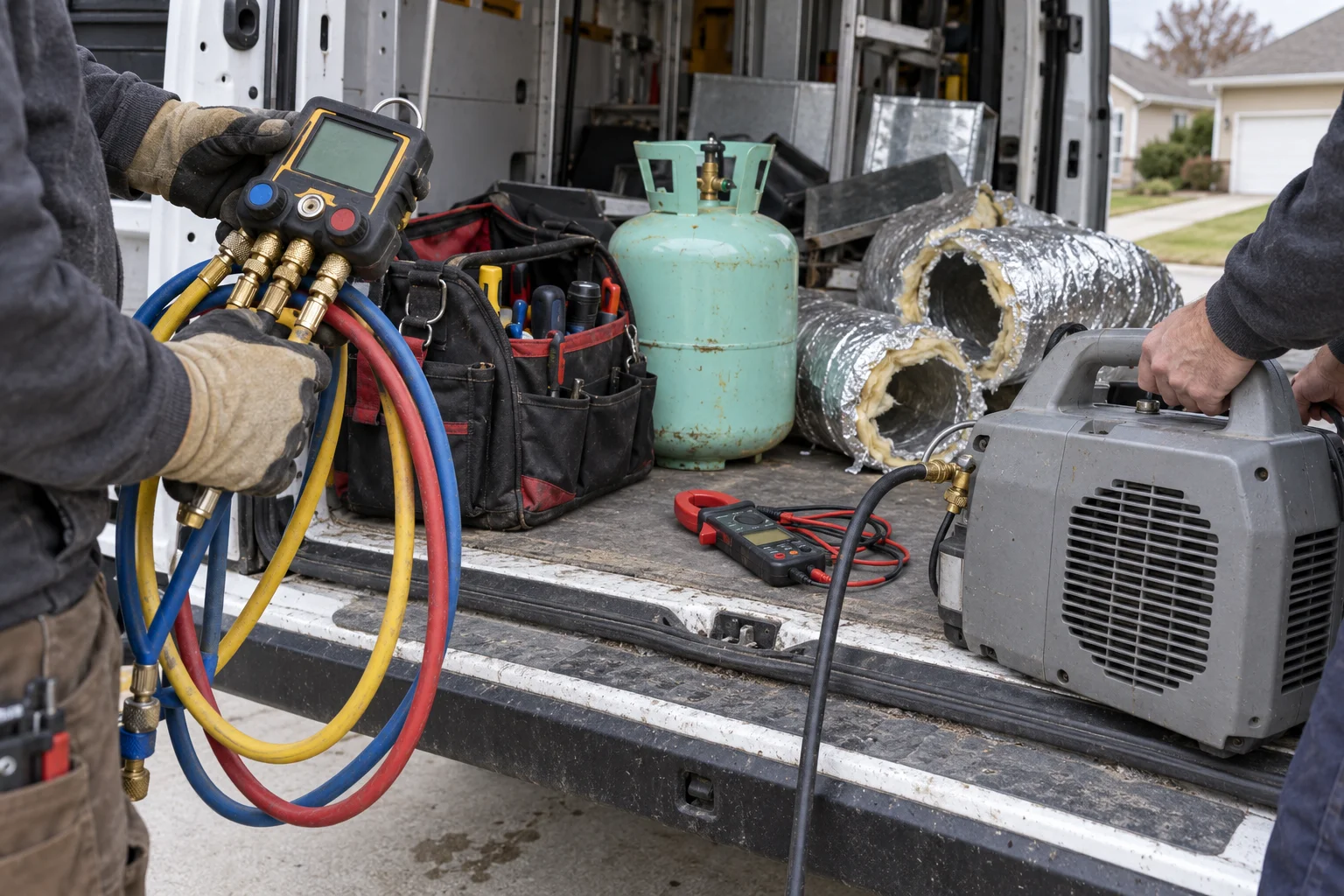
A two person van does not make a helper exempt by itself. The exemption depends on what the certified technician supervises and how continuously that supervision occurs.
The EPA exemption uses two words shops cannot skip
The EPA states: “Apprentices are exempt from certification requirements provided they are closely and continually supervised by a certified technician.”
The regulation says the same thing in 40 CFR 82.161: “Apprentices are exempt from the requirement in paragraph (a)(1) of this section provided the apprentice is closely and continually supervised by a certified technician.”
That language does not create a general apprentice exception. It creates a limited exception tied to supervision.
The regulation also assigns responsibility to both people: “The supervising certified technician and the apprentice have the responsibility to ensure that the apprentice complies with this subpart.”
That means the certified tech cannot treat the helper as fully independent on refrigerant work. The apprentice cannot assume that being on the same van is enough.
The regulation does not give you a distance or time limit
EPA does not define “closely and continually” with a number of feet or minutes. There is no stated distance that automatically qualifies, and there is no stated time period that automatically breaks supervision.
That leaves a real gap for the shop to fill. If your policy says a helper can work on a refrigerant task while the certified tech is somewhere else in the home, the policy needs to explain what supervision remains in place. Do not build your process around a guess about what EPA means.
A pattern that shows up on two person vans makes the issue clear. The certified tech sends the helper back outside to hook up the gauges and recover the charge while the tech stays inside working on the thermostat or handling a second task in the attic. That is the moment when the supervision is arguably no longer close or continual.
The tech may still be responsible for the job. The helper may still be an apprentice. Neither fact answers the supervision issue by itself.
Put the helper’s solo tasks in writing
Give the crew a written rule that separates staging work from refrigerant work. A helper may carry tools, stage equipment, and cut a filter without certification. Your written rule should prohibit the helper from handling gauges, refrigerant, or recovery alone.
The certified technician should remain close enough to supervise the helper while the helper performs a refrigerant task. Treat that as your shop standard, not as a claim that EPA has published a specific distance. For recovery requirements and the work the certified technician owns, use your process for EPA 608 evacuation minimums and for what happens to recovered refrigerant.
The helper also should not buy refrigerant. EPA states that anyone purchasing refrigerant for use in a stationary appliance or handling refrigerants must be Section 608 certified. An uncertified helper cannot be the person who buys refrigerant at the supply house.
Keep the purchase task with a certified person. Keep your refrigerant storage and handling process clear at the shop as well. Your crew can review that process alongside locking refrigerant caps.
Pair the van before the call reaches dispatch
Dial 72 answers calls 24/7 and sends a text summary of each call to the shop owner or dispatcher with triage notes, including equipment type, symptoms, and urgency. Because that summary arrives before the truck rolls, a dispatcher can spot a refrigerant side call and pair a certified tech with the helper instead of sending a helper heavy van.
Dial 72 does not decide who is certified. The shop does.
That pairing decision matters when the call may involve gauges, refrigerant, or recovery. A dispatcher who sees the equipment type and symptoms before dispatch can make the certified technician part of the call plan from the start, rather than trying to fix a supervision problem after the helper is already at the equipment.
Pick the certification type before the helper tests
Section 608 sets four certification types:
- Type I covers small appliances.
- Type II covers high and very high pressure appliances.
- Type III covers low pressure appliances.
- Universal covers all types.
The helper should test early instead of treating the exemption as a permanent job classification. Build checking certifications into the shop’s record process, and keep the certification copy where the rule requires it. Technicians certified under Section 608 must keep a copy of their certificate at their place of business.
The Section 608 rule is separate from state contractor and apprentice licensing rules. Check your state board before assigning work based on the federal exemption.
A helper who is learning refrigerant work may also need training for equipment and refrigerants beyond Section 608. Your whole crew can review A2L shop readiness as a separate training matter.
Change the dispatch rule today
Write one shop rule that lists what an uncertified helper may do alone and prohibits gauges, refrigerant handling, and recovery alone. Require the certified technician to stay close and continually supervise whenever the helper works on a refrigerant task. Do not send an uncertified helper to buy refrigerant.
Then add certification status to your dispatch records and use the Dial 72 triage summary to pair refrigerant side calls with a certified technician before the van leaves.