TL;DR: New York’s Part 494 bulk refrigerant ban applies to virgin refrigerant, not reclaimed refrigerant. The May 7, 2026 injunction covers only the sale or purchase of bulk R-404A and R-507A, and the appeal remains unresolved, so check the Third Department docket and DEC’s Part 494 page before relying on it.
New York’s first prohibition date covered virgin R-404A and R-507A
New York’s amended 6 NYCRR Part 494 took effect January 9, 2025. The first bulk refrigerant prohibition applies to a container of virgin, not reclaimed, regulated substance with a 100-year GWP above 2,200. That includes bulk containers of R-404A and R-507A.
It does not include virgin R-410A under that first date. DEC’s table places virgin bulk R-410A under the 2030 prohibition year. Later years in the same table reach R-134a and R-448/449 in 2033, and R-32, R-454B and R-513B in 2040.
The rule concerns the sale or purchase of virgin bulk containers. It does not ban servicing equipment or the sale of repair services. DEC says there is no restriction, prohibition or deadline on using any substance, product or equipment, including stock purchased before the applicable prohibition date.
That distinction matters when you quote a repair. A technician may service equipment with refrigerant already in the shop’s inventory. A servicer may not purchase, sell or distribute virgin bulk substances after the applicable prohibition date except as part of a service repair.
The court fight started with a distributor challenge
HARDI filed its petition and complaint on April 9, 2025, in Albany County Supreme Court, Index No. 903624-25. AHRI and HARDI are petitioners in the appeal.
On December 22, 2025, Justice Richard J. McNally, Jr. dismissed the request for a declaratory judgment and denied the request to void the rule. The ruling stated, “This court finds that DEC’s adoption of amended Part 494 was not arbitrary and capricious.” The court found that DEC complied with the State Administrative Procedure Act and did not exceed its jurisdiction. It also noted the rule’s variance process for temporary relief.
AHRI and HARDI filed a notice of appeal on January 20, 2026, with the Appellate Division, Third Judicial Department.
The court fight did not stop all of Part 494. In March 2026, DEC’s temporary enforcement discretion for R-404A and R-507A was set to end March 31. The Third Department extended that protection and barred DEC from enforcing Section 494-1.4(f)(1) while the injunction request was pending.
On May 7, 2026, the Appellate Division granted HARDI’s motion for a preliminary injunction pending appeal. The order covers only the prohibition on the sale or purchase of bulk refrigerant as applied to R-404A and R-507A. It does not suspend the rest of Part 494. DEC and NRDC, the Natural Resources Defense Council, opposed the injunction.
The latest filings verified for this article are from May 2026. Check the Third Department docket, CV-26-0498, and DEC’s Part 494 page before relying on the injunction or any deadline.
HARDI and AHRI say the market cannot meet the rule
HARDI CEO Talbot Gee said, “Part 494 sets mandates the market cannot meet.” He also said, “There are no products and safety standards for the refrigerant alternatives New York is requiring.”
HARDI estimated that 18,130 New York systems rely on R-404A and R-507A. Its study, as reported by ACHR News, estimated $106.2 million in economic output at risk. HARDI vice president of government affairs Alex Ayers called the timeline and structure of Part 494 “unworkable.”
The petitioners argue that DEC did not follow proper administrative procedure and did not weigh market evidence. They say the industry’s inability to comply is “abundantly clear.”
For a shop, that argument shows up before the technician arrives. A pattern you see in call summaries from mixed shops is a caller with a dead walk-in cooler or an older system asking, “Can you even get the refrigerant?” The question often comes before price.
DEC and NRDC defend the rule and its supply distinction
DEC adopted Part 494 under New York’s climate law. The agency says the rule “promotes the replacement of HFCs with equally effective alternatives that are better for the environment” and aligns with actions by California, Washington and other states. Interim DEC Commissioner Sean Mahar said DEC “continues to advance efforts to reduce the harmful pollution fueling climate change.”
DEC points to the variance process and its enforcement discretion for hardship. Part 494-1.8 includes a variance process for temporary relief, including relief for small businesses. Section 494-1.5(a)(12) exempts some projects that held a building permit before January 9, 2025. NRDC intervened to defend the regulations.
DEC’s FAQ says the container prohibition does not apply to servicing. It also says the rule bans only virgin refrigerant, making reclaimed refrigerant the lawful supply. The agency’s position is more specific than the uncertainty raised in an ACCA February 2025 blog post, which said the rule text did not appear to provide an exception for reclaimed refrigerants and asked DEC for clarification. Review the reclaimed refrigerant rules before setting a shop policy.
DEC also warns that shortages are expected as HFCs are phased down under the federal AIM Act. Similar federal prohibitions are being phased in under 40 CFR Part 84.54. Other states are watching New York, and the same questions about virgin versus reclaimed supply and supplier timelines come up elsewhere.
Your purchasing file needs the refrigerant type and cylinder status
Before quoting a repair, identify the refrigerant in the system. R-410A bulk is not covered by the first prohibition date. DEC’s table places it in 2030. Virgin bulk R-404A and R-507A are the contested substances under the injunction.
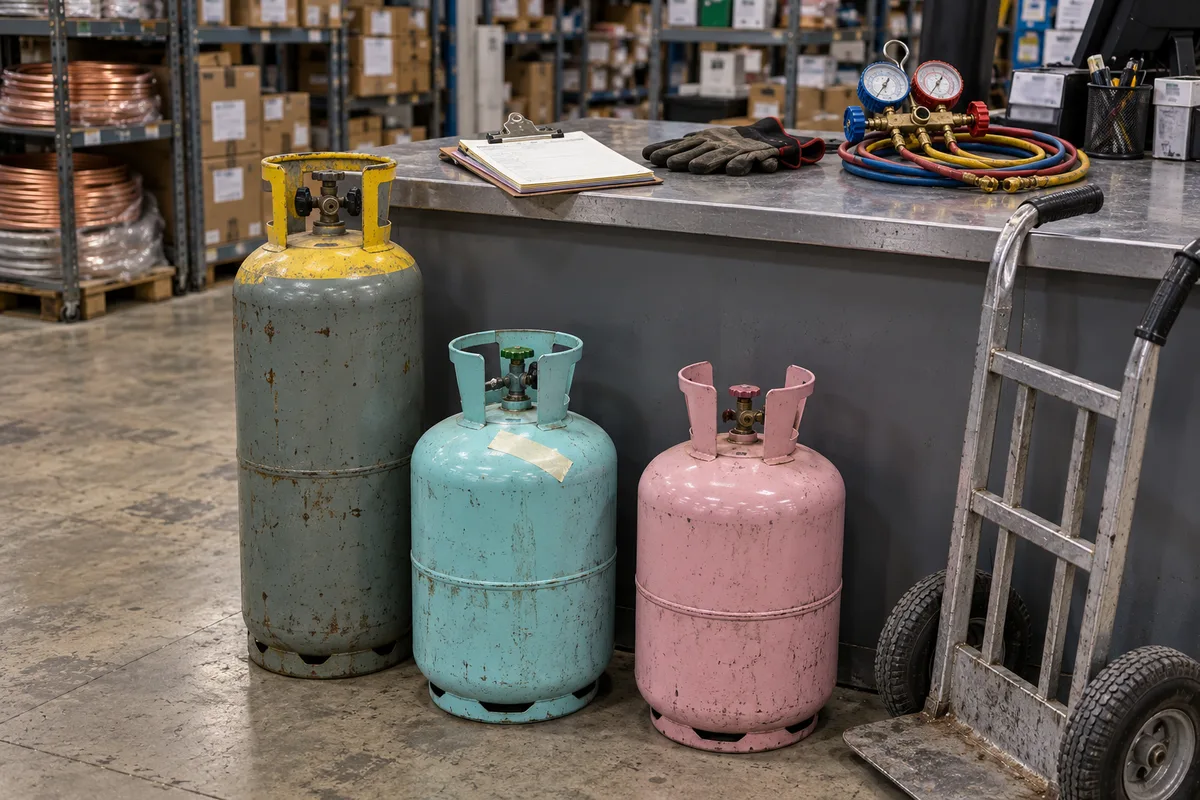
Ask the supplier whether the cylinder is reclaimed or virgin. Keep the invoice. DEC says using stock purchased before a prohibition date is allowed, so your records should show when the shop acquired that stock and what the cylinder contains.
Do not treat the injunction as a broad delay of Part 494. It covers only bulk R-404A and R-507A sale or purchase. It does not cover every refrigerant, every container, servicing, or use of existing equipment.
Your team also needs to track the equipment and safety changes that accompany refrigerant replacement. Use the A2L shop readiness guidance for shop preparation, and review the disposable cylinder heel rule when handling disposable containers. The federal dispute over refrigerant requirements also has a separate history, covered in the EPA refrigerant rule ACCA challenged. The R-410A installation deadline that was lifted is another reminder not to rely on an old deadline without checking its current status.
Your after-hours call process can capture the supply question
Dial 72 answers calls 24/7, texts the owner a triage summary with the caller’s equipment and symptom, escalates real emergencies, and books on the shop’s calendar.
That matters when an after-hours call says, “Walk-in is warm.” The text summary can capture the equipment type and the refrigerant question. You can check supply the next morning instead of cold-calling back for basic information.
Outside New York, Part 494 does not apply today. The purchasing questions still matter because state rules can run ahead of federal ones.
For this season, update your intake script to ask for equipment type and refrigerant before quoting. Ask suppliers whether the cylinder is virgin or reclaimed, save every invoice, and check CV-26-0498 and DEC’s Part 494 page before relying on any deadline or on the narrow R-404A and R-507A injunction.