TL;DR: A dusty burning smell on the furnace’s first run of the season is usually dust burning off and should be fading within a few hours. Burning plastic, chemical, car-exhaust, or rotten-egg smells, a steady odor, a CO alarm, or symptoms require the caller to shut down or leave and get the right emergency help.
On the first cold morning of the season, “burning smell” calls tend to stack up between 6 and 9 a.m. Most are the same dust story. That is exactly why one real problem is easy to miss when the dispatcher has already filed the whole batch as “dust.”
Dust on the furnace can smell like burning on the first run
After months of disuse, dust settles on the heat exchanger, burners, and other furnace components. When the furnace fires, that dust burns off. The odor travels through the vents.
This is common on the first run of the season. A dust smell should fade within a few hours at most. The right description for the caller is simple: it should be fading, not holding steady.
A dirty or clogged filter is another common cause worth checking during the visit. The caller can open windows to ventilate the house. Do not let “first heat of the season” end the call before you sort the smell and duration.
Ask what the smell is and how long it has lasted
The first-call script needs four questions:
- What does the smell resemble?
- How long has the furnace been running?
- Is anyone feeling unwell?
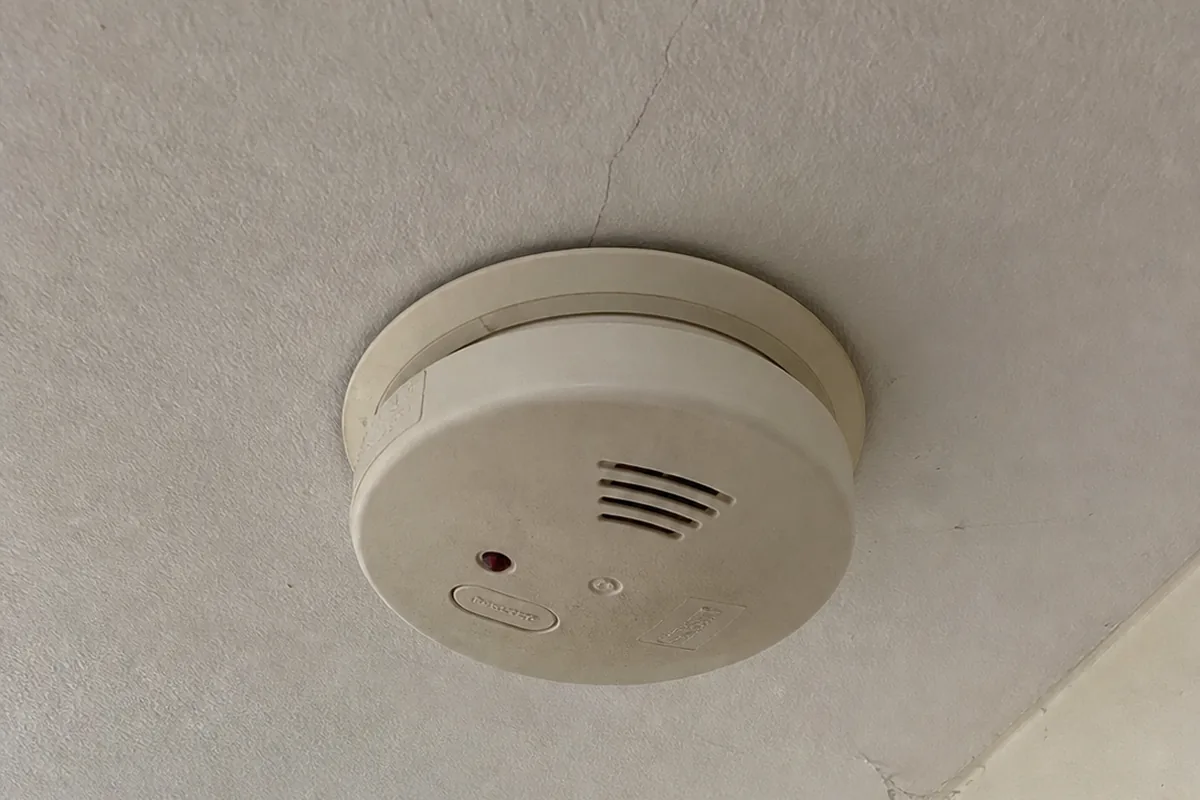
- Is a carbon monoxide alarm sounding?
The answers put the call into the right lane.
| Caller report | Direction for the call |
|---|---|
| Dusty smell that is fading | Open a window and run the furnace. Book a normal visit if the caller wants the system checked. |
| Burning plastic, chemical or car-exhaust smell, or an odor that is not fading | Tell the caller to shut off the system and book a professional visit. |
| Rotten-egg smell | That is the odorant added to natural gas. It is a gas smell, not a dust smell. Tell the caller to leave the house and call the gas utility from outside, not the shop. |
| CO alarm sounding or someone feeling unwell | Tell the caller to get outside and call 911. Use the CO alarm call script for the rest of the dispatch handling. |
Do not book a gas smell as a normal furnace visit. Do not put a CO alarm into the regular queue. Those calls need immediate escalation.
Dial 72 answers 24/7, asks the smell and duration questions on every first-cold-morning call, and texts the shop a call summary with the answers. It escalates immediately to the on-call tech when the caller reports a gas smell, CO alarm, or symptoms instead of booking the call as a normal visit. For non-urgent calls, it books straight onto the shop calendar and answers in English and Spanish.
The tech should check more than the filter
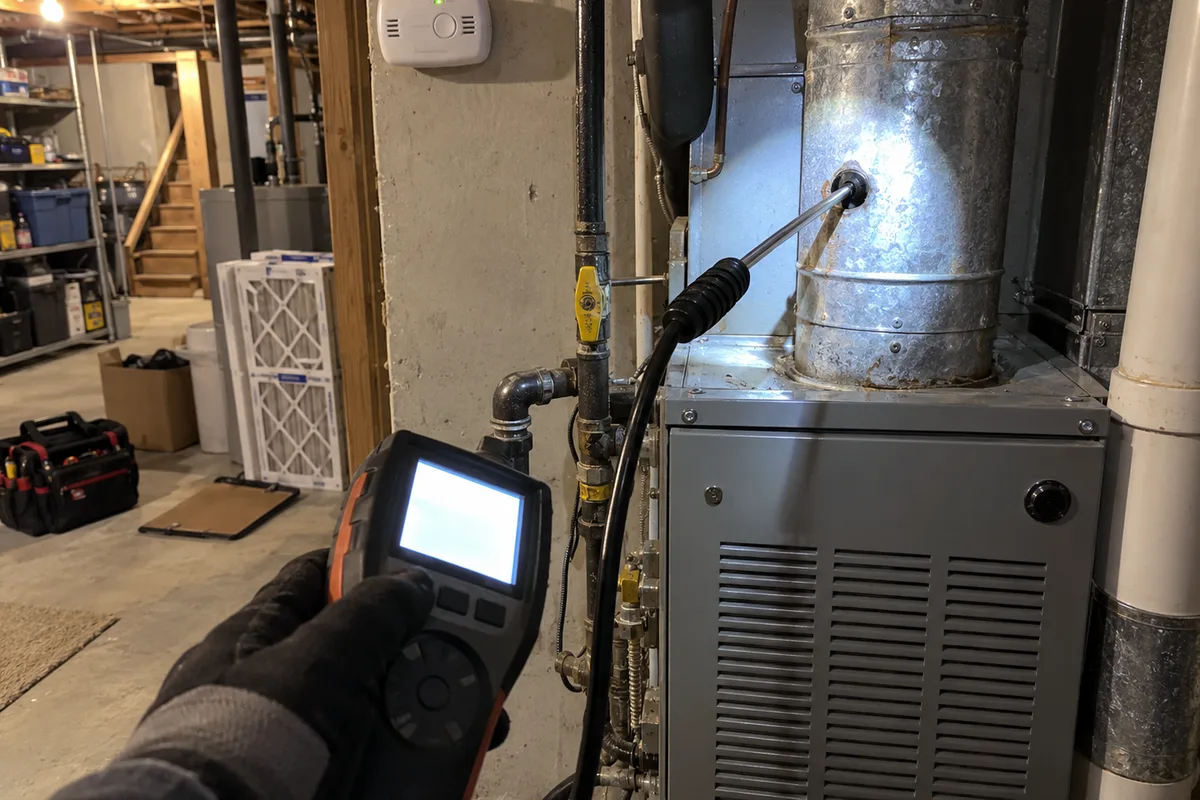
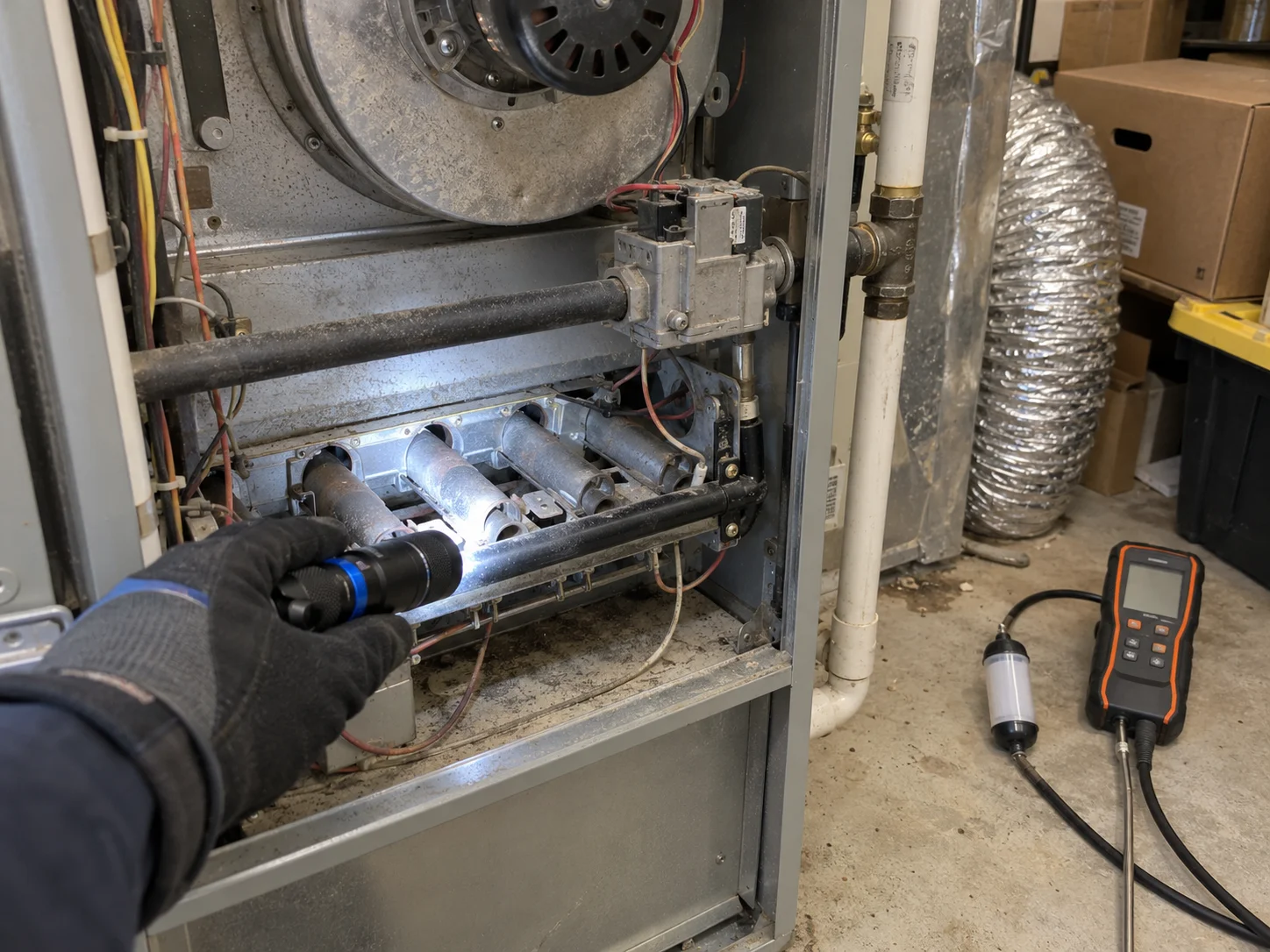
A tech visiting for a first-run burning smell should check the filter, inspect the blower and burner area for debris, look at the heat exchanger and vent, and take a combustion and CO reading.
That visit separates dust burn-off from a condition that needs correction. It also gives the shop a clear basis for explaining what the caller smelled and what the system needs next.
If the visit is being treated as maintenance, use the ANSI standard for what a maintenance visit includes to set the scope. If your shop charges a diagnostic fee, state it on the phone before the visit. The diagnostic fee phone script gives the team a consistent way to do that.
The first cold morning is a tune-up opportunity
The U.S. Consumer Product Safety Commission says, “CPSC urges consumers to schedule a yearly professional inspection of all fuel-burning home heating systems, including furnaces, boilers, fireplaces, wood stoves, water heaters, chimneys, flues and vents.”
CPSC also says heating equipment is a top contributor to unintentional non-fire carbon monoxide poisoning deaths. More than 200 people die each year from unintentional non-fire CO poisoning. CPSC recommends at least one CO alarm that meets the UL 2034 standard.
That makes the first burning-smell call more than a nuisance call. If the caller has a fading dust odor, the shop can book the inspection while the furnace is already on the schedule. The shop that answers clearly on the first cold morning is the shop that gets the annual visit.
A missed no-heat call has a different cost and a different urgency. Use the cost of a missed no-heat call when training dispatchers on why these calls cannot sit unanswered. Before the first cold week, review what to stock on the van so the tech is ready when a normal dust call turns into a repair.
What should the dispatcher say first?
Start with this:
“Tell me what the smell is like, how long the furnace has been running, whether anyone feels unwell, and whether a carbon monoxide alarm is sounding.”
Then follow the category. Dust that is fading can be booked. Plastic, chemical, car-exhaust, or steady burning odors need the furnace shut off and a professional visit. Rotten eggs means leave the house and call the gas utility from outside. A CO alarm or symptoms means get outside and call 911.
That is the difference between filing every first-season smell as dust and sorting the call correctly.