TL;DR: When a caller says a carbon monoxide alarm is sounding, ask first whether it is sounding now and whether anyone has headache, dizziness, or nausea. If yes or uncertain, tell everyone, pets included, to get outside into fresh air and call 911 before discussing the furnace.
Ask this before you collect the address: “Is the carbon monoxide alarm sounding right now, and does anyone have a headache, dizziness, or nausea?” That first sentence can decide whether the caller gets outside or stays inside explaining a furnace problem.
If the answer is yes, or the caller is unsure, tell them to get everyone, pets included, outside into fresh air and call 911 or the local emergency number. Tell them not to go back inside to shut anything off. A shop is not a substitute for emergency responders.
The appliance story can hide the safety fact
A pattern shops describe is that the caller opens with the appliance: “My furnace is acting up, and the alarm is beeping.” The safety fact is buried in the middle of a long story. A dispatcher following a booking script collects the address and phone number first, then hears about the headaches at the end.
That order is backward. The alarm question and symptom question come first. Scheduling comes later, if it belongs on the call at all.
The CPSC lists headache, dizziness, weakness, nausea, vomiting, sleepiness, and confusion as symptoms of carbon monoxide poisoning. The CDC lists headache, dizziness, weakness, upset stomach, vomiting, chest pain, and confusion among the most common symptoms. Your dispatcher does not need to identify the cause over the phone. The dispatcher needs to hear the warning signs and give the safety instruction.
Do not turn an emergency call into furnace troubleshooting
Only after the caller is outside and emergency services have been called should the shop talk about the furnace. Do not ask the caller to open the furnace, relight it, or reset anything.
Do not diagnose over the phone. A silent alarm does not prove that the problem is gone. An alarm can also make a low battery or end of life chirp, which is a different and calmer conversation. The dispatcher should not assume that explanation. Ask whether the alarm is sounding right now before treating it as a chirp.
The CPSC reports that more than 200 people in the United States die every year from accidental non-fire related carbon monoxide poisoning associated with consumer products. That is why the first response should be an exit instruction, not a parts discussion.
For the equipment side of the call, use the safety guidance in the CO alarm rule changes and why furnace shops should know them. It covers the alarm requirements your furnace shop needs to know. It does not replace the immediate instruction to get outside and call 911.
Log the call as a priority safety call
A suggested shop policy should classify this as a priority safety call, not a routine ticket. Record who was in the home, which symptoms were reported, whether 911 was called, and which appliances are gas or fuel burning.
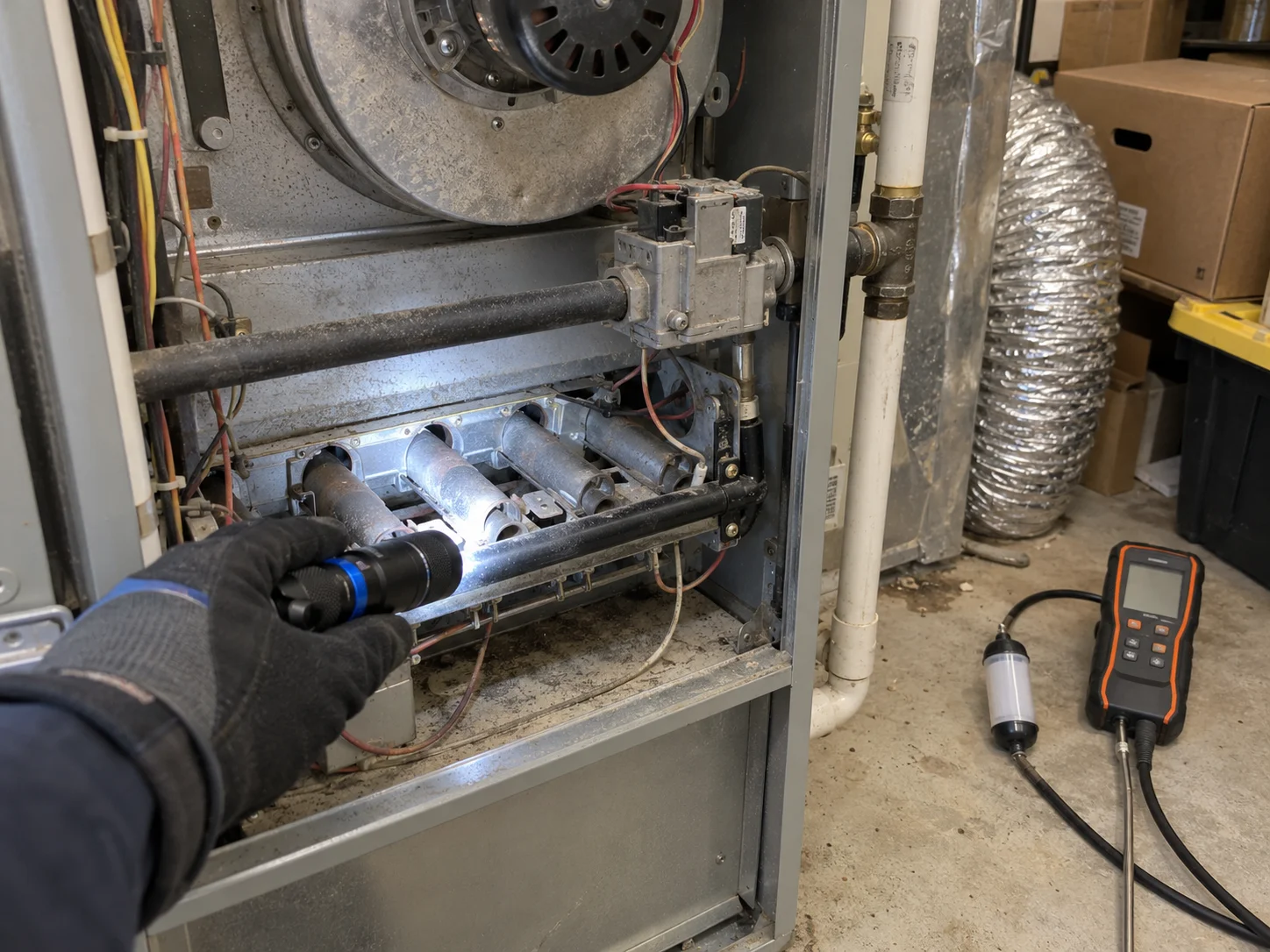
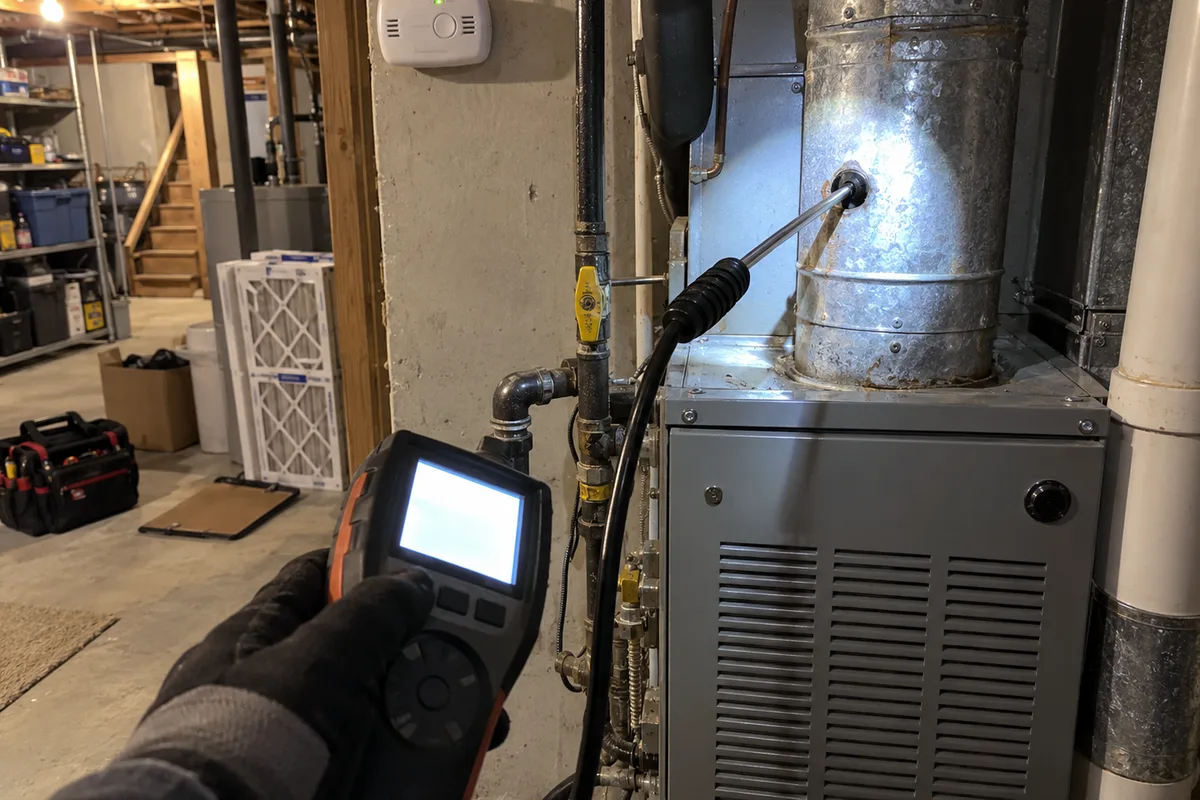
That information needs to be available before a technician walks in. The tech should know what the caller reported and what happened after the alarm sounded. The technician should take a combustion analyzer reading rather than simply replacing the part that looks wrong. Use the measurement that makes a tune-up a defensible safety check as the shop reference for that work.
The dispatcher should not promise that a service visit makes the home safe. The immediate safety action belongs with the caller and emergency responders. The equipment evaluation comes after that.
Put the script in the on-call policy
Write the response down before the first cold weeks arrive. Decide who on the on-call rotation takes this call, who receives the escalation, and what information goes into the ticket.
The script should be the same at 2 a.m. as at 2 p.m. A tired dispatcher should not have to invent the response while a caller is frightened, dizzy, or trying to explain a furnace problem. Write the on-call rotation down before November and attach the carbon monoxide call script to it.
The script can be short:
“Is the carbon monoxide alarm sounding right now? Does anyone have a headache, dizziness, or nausea?”
If yes or unsure:
“Take everyone, including pets, outside into fresh air now. Call 911 or your local emergency number. Do not go back inside to shut anything off.”
Then record the answers and escalate. Do not add furnace troubleshooting to that first exchange.
Dial 72 sends the emergency instruction first
Dial 72 answers 24/7 in under a second. Its answering flow treats a gas smell or carbon monoxide alarm as an emergency. It does not queue the call. It escalates straight to the on-call tech and texts the owner a summary afterward.
The AI gives the get-outside-and-call-911 instruction first. It does not diagnose the equipment. It answers in English and Spanish, which matters when a caller is dizzy and frightened and needs the instruction in the language they speak.
That call still needs the same shop policy and the same technician follow-up. The answering service can deliver the first safety instruction and alert the on-call tech. It does not turn a carbon monoxide alarm into a routine appointment.
CPSC recommends battery-operated carbon monoxide alarms, or alarms with battery backup, on every level of the home and outside sleeping areas. When the call comes in, ask the alarm question before you ask for the address. Mark the ticket as a priority safety call. Tell the caller to get outside and call 911 when the alarm is sounding or anyone has symptoms. Then give the responding technician the facts needed for the equipment check. This call starts with safety.