TL;DR: Steam and a light layer of frost that clear within about 15 minutes usually show a normal heat pump defrost cycle. Ice that remains an hour later, covers the whole unit, or leaves the fan stopped needs a technician.
Steam from the outdoor unit can be normal
A heat pump may look like it is smoking during defrost. The steam is water vapor. It is normal.
In heating mode, the system checks for frost roughly every 30 to 90 minutes. Actual defrosting depends on the weather and the amount of frost on the coil. The process usually lasts between 5 and 15 minutes.
The system may pause heating briefly. It may bring on backup heat strips while it shifts modes. The homeowner may hear a whooshing sound. Those details can sound alarming on the phone, but they can all occur during a normal defrost cycle.
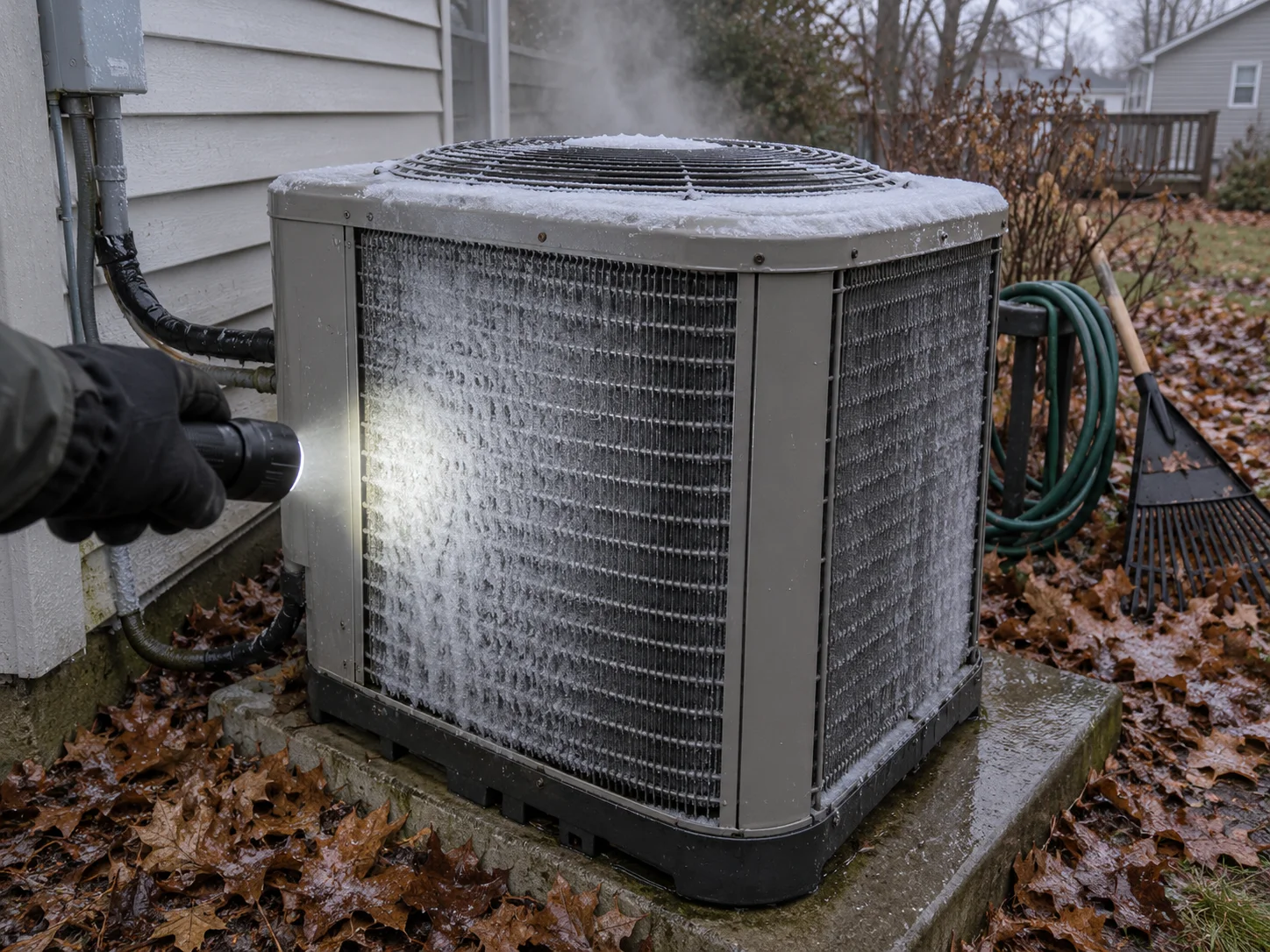
A light layer of frost on the outdoor coil in cold weather is also normal. The problem is heavy ice covering the entire unit.
The first question is how long the ice has stayed
Ask, “How long has it been like this?”
Steam or frost that clears within about 15 minutes points toward the defrost cycle. Ice that is still there an hour later does not.
Ask what the unit is doing now. Is the steam gone? Did the frost clear? Did the system return to heating? If the caller reports that the unit defrosted and the house is getting warm air again, the call may not need an immediate truck roll.
If the unit refreezes quickly after thawing, book the visit. Frequent defrosting or unusually long system run time also calls for a technician. Defrost that repeatedly runs longer than 5 to 15 minutes is another reason to send someone out.
Your dispatcher can say:
“Steam and a light frost for a few minutes is normal. If it stays iced over, please leave the ice alone and do not use hot water.”
The ice pattern tells you more than the word “frozen”
Ask, “Is the whole unit covered, or is it just a light frost on the coil?”
Then ask, “Is the ice even, or is it only on one side or in an unusual pattern?”
Heavy ice covering the entire unit signals a problem. Ice on one side or in an unusual pattern is also a technician call. The caller may describe the outdoor unit as frozen even when only part of the coil has frost, so ask for the pattern instead of relying on that word alone.
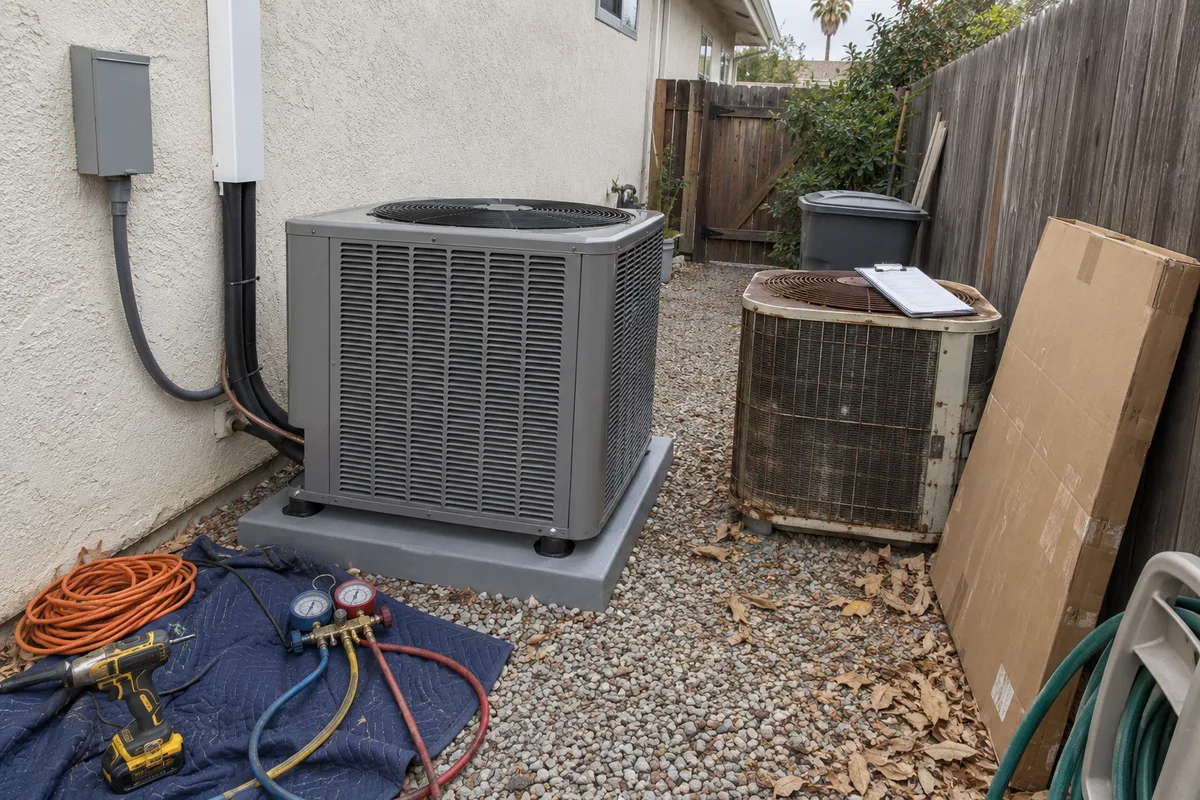
Real freeze up can come from blocked or restricted airflow. Debris around the outdoor unit and a dirty filter are listed causes. Low refrigerant from a leak can also cause the problem. A defrost failure is another common severe cause, including a failed defrost control board, timer or sensor.
Do not ask the homeowner to diagnose which cause is present. Use the answers to sort a normal cycle from a service call.
The fan and the air from the registers settle the call
Ask, “When the ice melts or the unit finishes, does the fan spin and does the house get warm air?”
Then ask, “Are you hearing grinding or squealing?”
The outdoor fan should spin after the ice melts. If it will not, send a technician. Grinding or squealing is also a reason to book the visit. Warm air from the registers helps show that the system returned to heating, but it does not clear a unit that quickly refreezes or runs unusually long.
If the caller reports no heat in cold weather, treat that as an emergency for your shop, because an unanswered no-heat call is costly. Dial 72 answers the shop’s line 24/7 and escalates real emergencies to the on call tech.
For callers who need more help with backup heat, keep the distinction clear. Backup heat strips may come on during defrost. The aux heat setting is a thermostat configuration matter, which is separate from the outdoor unit’s defrost problem. See backup heat staging and aux heat lockout.
Tell homeowners not to fight the ice
Homeowners should not pour hot water on the outdoor unit. The sudden temperature change can crack components.
They should not chip or break the ice. Tools can damage the coils and fan blades.
The phone script should give the caller one safe instruction while the shop decides what happens next:
“Please leave the ice alone. Do not use hot water or tools on the unit. We will use what you told us to decide whether a technician needs to come out.”
If the unit has cleared and is heating normally, document that. If it remains iced over, the fan will not spin, or the caller reports unusual noise, document those details before booking.
Monday mornings produce both kinds of calls
Dispatchers describe the same pattern after the first damp cold snap. A cluster of “my heat pump is smoking” calls comes in. Most are the defrost cycle. One or two units are truly iced over.
The two calls sound identical during the first 10 seconds. That is why the three questions matter. Time separates a short defrost from ice that will not clear. The coverage and pattern show whether the coil has light frost or a serious buildup. Fan operation, warm air and unusual sounds point to the next action.
Put those questions in the call script instead of leaving them to memory.
A call summary should show why the truck is rolling
Dial 72 answers in English and Spanish, asks callers questions like these, and texts the shop a summary of the call. The shop can see “steam for five minutes, now fine” separately from “iced over for hours, fan not spinning.”
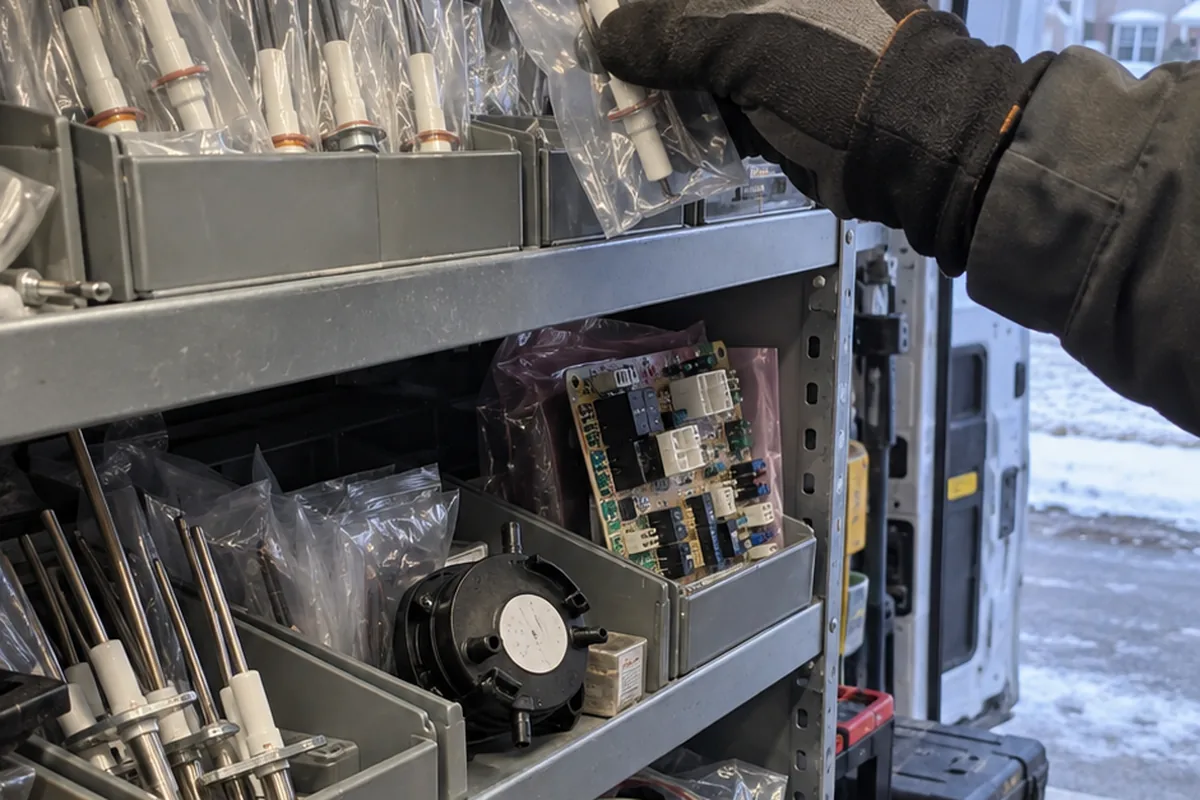
That distinction helps the dispatcher schedule the right call. It also gives the technician useful information before arrival. Stock the van before the first cold week so a real defrost board failure can be fixed in one trip.
If a truck must roll, tell the caller the diagnostic fee on the phone before booking the visit. Here is how to say the diagnostic fee on the phone. If the caller prefers Spanish, plan for Spanish-speaking callers.
Put the three questions into your dispatch script today. Ask how long the condition has lasted, how the ice is distributed, and whether the fan spins and warm air returns. Tell callers not to use hot water or tools. Send the truck when the ice remains, returns quickly, covers the unit, stops the fan, or comes with grinding, squealing, no heat, or unusually long defrosting.